
Imagine buying a stunning necklace that matches your favorite outfit. You wear it to a festive wedding, but its luster fades before the night ends. This happens because its thin precious-metal layer reacts to sweat, perfumes, and daily friction.
Good gold-plated jewellery care protects the delicate finish from wearing away. Simple habits today can help you avoid expensive restoration later and keep your collection bright. Our gold-plated jewelry care guide shares 11 steps to clean, store, and handle each item with confidence.
Learning how to care for gold-plated jewelry helps your favorite pieces stay bright for years. Rotate your accessories and avoid harsh household chemicals to protect the base metal underneath. These easy routines help keep your style shining bright.
Key Takeaways
- Understand that the thin gold layer requires gentle handling to prevent premature fading.
- Avoid exposing your accessories to water, sweat, and beauty products like lotions or perfumes.
- Store your items in a cool, dry place, ideally in individual soft pouches to prevent scratching.
- Clean your pieces regularly using only a soft, dry cloth to remove oils and dust.
- Rotate your collection frequently to reduce constant friction on specific items.
- Prioritize daily maintenance habits over aggressive cleaning methods that might damage the finish.
Way One: Learn What Gold-Plated Jewellery Needs to Stay Beautiful
To master how to care for gold-plated jewelry, first look beneath the surface. Unlike solid gold, plated items have a thin gold layer bonded to another base metal. Solid gold keeps its value and color throughout.
Understand how the gold layer differs from solid gold
Solid gold is precious metal all the way through. It keeps its color and does not tarnish over time. This process, called electroplating, makes gold a mere surface coating that can thin or wear away with regular use.
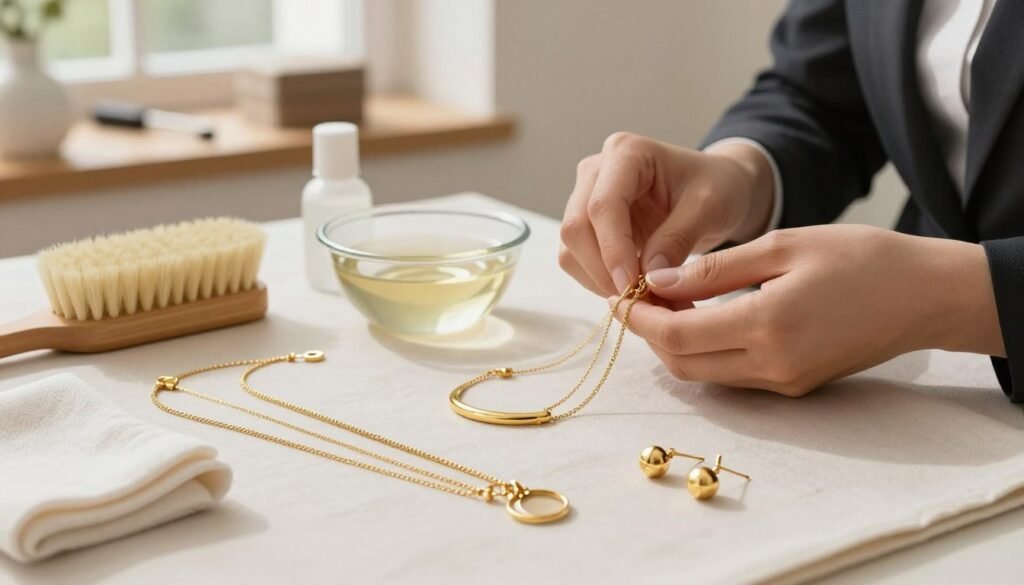
Recognize the base metals and finishes used underneath
Your accessory’s durability often depends on the metal beneath the gold layer. Manufacturers often use copper, brass, or sterling silver as the foundation. Sometimes, stainless steel adds strength, while a protective finish helps gold bond better.
Why friction, moisture, and chemicals affect plating
Friction is jewelry’s main enemy because it rubs the gold layer away over time. Moisture and chemicals in perfumes or lotions can seep through tiny pores in the plating. This causes the base metal to oxidize, making the gold layer flake or change color.
Set realistic expectations for wear and longevity
Following best practices for gold-plated jewelry care will extend item life, but plating cannot last forever. Its life depends on gold thickness, wear frequency, and daily habits. Knowing these limits helps you enjoy your jewelry and keep it looking its best longer.
| Base Metal | Durability | Common Use |
|---|---|---|
| Sterling Silver | High | Premium Plated Items |
| Brass | Medium | Fashion Jewellery |
| Stainless Steel | Very High | Everyday Wear |
| Copper | Low | Costume Pieces |
Way Two: Put Jewellery on After Your Beauty Routine
Protecting your gold-plated jewelry starts before you leave home. Many people speed accessory wear by putting jewelry on damp skin after lotion or perfume. Proper gold-plated jewellery care means making jewelry the last step of your morning routine.
Apply perfume, moisturizer, sunscreen, and makeup first
Finish your beauty routine before you open your jewelry box. Apply body lotion, facial moisturizer, and sunscreen, then let them settle. If you use hairspray or perfume, spray them with only your clothes on, away from your jewelry.
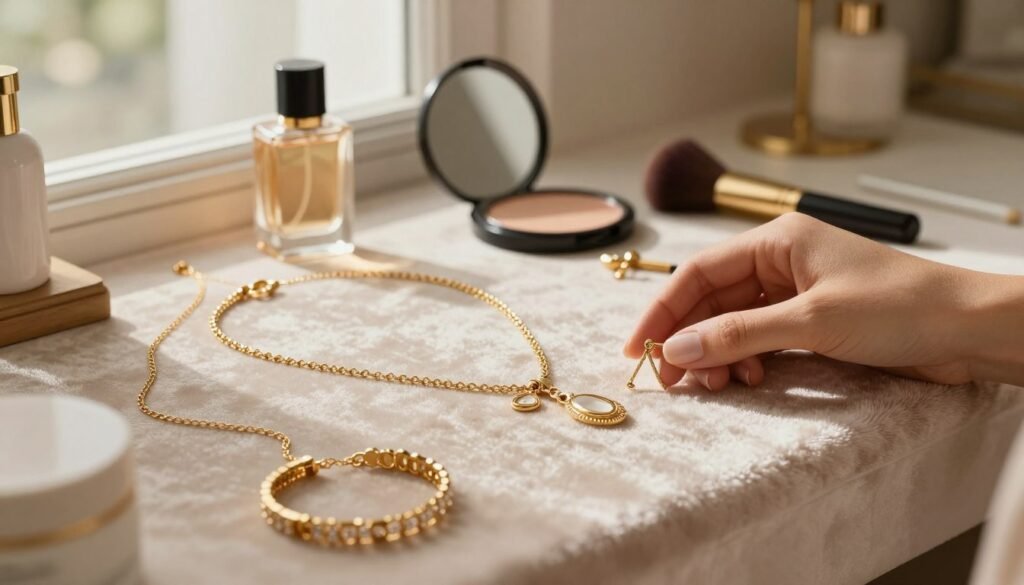
Allow skincare and fragrance products to dry completely
Damp creams and alcohol-based fragrances create a chemical transfer layer on gold plating. This residue acts like a magnet for dust and grime, dulling the finish over time. Patience is your best tool here; wait at least five to ten minutes until your skin feels dry.
“The beauty of your accessories is a reflection of the care you invest in them every single day.”
Beauty ingredients that can dull or weaken gold plating
Some common cosmetic ingredients are harsh on thin gold layers. Watch for these substances, which can cause premature tarnishing or stripping:
- Alcohol: Found in most perfumes and toners, it can strip the protective lacquer.
- Acids: Ingredients like AHAs or BHAs in skincare can chemically react with the base metal.
- Salts and Oils: These leave a film that traps moisture against the plating, leading to oxidation.
Use a final check before putting on necklaces, earrings, or bracelets
Check your skin before fastening a necklace or sliding on bangles. Make sure your neck, wrists, and earlobes have no product or moisture. By protecting gold-plated jewelry from daily chemicals, you help favorite pieces keep their shine longer.
Way Three: Remove Gold-Plated Pieces Before Water Exposure
Water is a quiet enemy of favorite gold-plated accessories. Keeping rings or necklaces on during daily routines may seem easy, but moisture damages surfaces. Following these tips for maintaining gold-plated pieces can help your collection last longer.
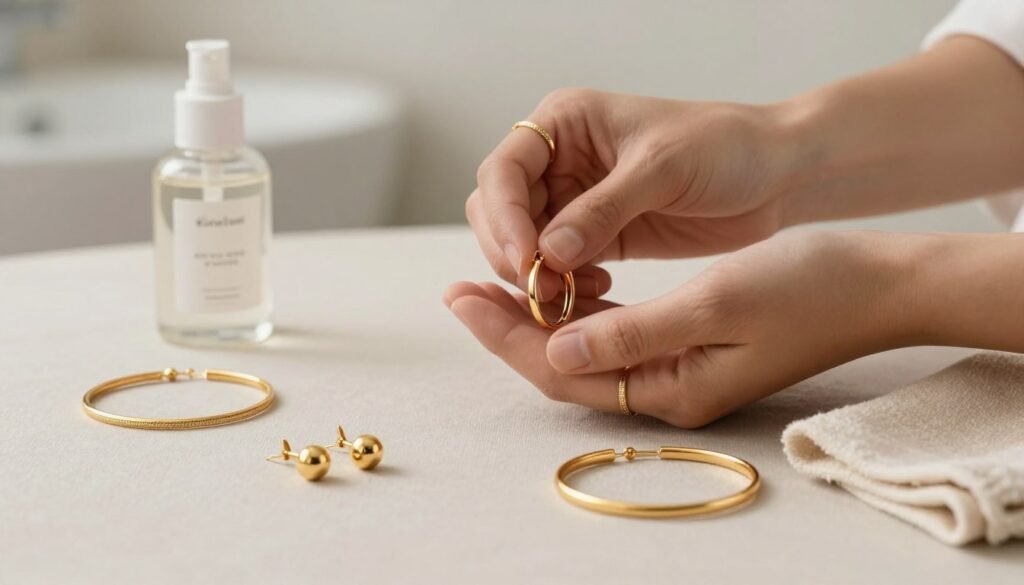
Take off jewellery before showering, bathing, or swimming
Always remove your items before entering the shower, bath, or pool. Long exposure to water weakens the bond between the base metal and gold layer. Even clean water can cause tarnishing and, later, peeling.
Protect pieces from chlorinated and salt water
Chlorine in pools and salt in oceans are harsh on delicate finishes. These chemicals act as oxidizing agents and speed gold coating breakdown. If you wear your jewelry in water, rinse it with fresh water at once. Dry it well with a soft cloth.
Why hard water and soap residue can leave a dull film
In many regions, tap water contains minerals called hard water. When these minerals mix with soap or body wash, they form a stubborn film. This film dulls jewelry and traps moisture against the metal, causing long-term damage.
| Water Type | Impact on Plating | Risk Level |
|---|---|---|
| Chlorinated Pool | Chemical corrosion | High |
| Salt Water | Abrasive erosion | High |
| Hard Tap Water | Mineral buildup | Medium |
Create a simple removal habit at home and while traveling in India
Building a consistent habit is essential for preserving gold-plated jewelry. Keep a small, velvet-lined pouch near your bathroom sink or in your travel kit. Use it when washing hands or showering.
Never leave your jewelry on a wet basin edge. Humidity can harm it as much as direct water contact.
“The secret to longevity for plated accessories is keeping them dry and away from harsh chemicals. A simple habit of removal before water exposure is the best investment you can make for your collection.”
Way Four: Keep Sweat and Body Oils Away From the Surface
Sweat and body oils can quietly harm your favorite gold-plated accessories. These substances can speed tarnishing and make the finish look dull. Proper caring for gold-plated pieces means watching your surroundings and activity during the day.
Remove jewellery before workouts and outdoor activities
Take off rings, necklaces, and bracelets before heading to the gym or doing intense exercise. Sweat contains salts and acids that can harm the thin gold layer. Removing jewellery first keeps these corrosive elements from settling into tiny details.
Wipe pieces after wearing them in hot or humid weather
After heat exposure, your jewellery may have perspiration or residue. Use a soft, dry microfiber cloth to gently wipe each piece right after you get home. This removes moisture before it can damage the plating.
Extra precautions for India’s monsoon and summer conditions
In India, high humidity and intense heat can be harsh on accessories, especially during monsoon season. Moisture in the air can cause oxidation much faster than usual. Gold-plated jewellery care means storing pieces somewhere dry and cleaning them after outdoor exposure.
Prevent prolonged contact with skin oils around clasps and chains
Buildup often hides where you cannot easily see it, like earring backs or chain links. Skin oils and lotions collect around bracelet closures and necklace clasps, trapping dirt in a film. Inspect these areas regularly to keep residue from harming the metal over time.
Way Five: Clean Gold-Plated Jewellery With a Gentle Method
For how to care for gold-plated jewelry, cleaning is often the most misunderstood step. Many people think hard scrubbing removes tarnish, but it can strip thin gold from favorite pieces. A gentle approach keeps your accessories beautiful without harming their finish.
Prepare lukewarm water and a mild, fragrance-free soap
Fill a small bowl with lukewarm water. Add a few drops of mild, fragrance-free dish soap. Avoid harsh detergents and antibacterial soaps, which may harm the base metal of your jewellery.
Use a soft microfiber cloth or clean cotton swab
Dip a soft microfiber cloth into the soapy water, then wring it until barely damp. Gently wipe your jewellery to remove dust, oils, and light residue. Use a clean cotton swab for hard-to-reach areas and stubborn dirt.
How to clean chains, textured surfaces, and delicate settings
Chains and intricate settings can trap sweat and skin oils in tiny crevices. Dab lightly instead of rubbing, because gold plating may be thinner on these surfaces. Patience is key near delicate stones or textures, so you do not snag metal or loosen settings.
Rinse lightly without soaking the jewellery
After wiping the piece, rinse it quickly under a thin stream of cool water. Never soak your jewellery, because moisture can reach the base metal and cause oxidation. A quick rinse removes any leftover soap film.
Dry every piece completely before storing it
Use a clean, dry microfiber cloth to pat your jewellery until it has no moisture. Let each piece air dry on a soft towel for a few minutes. Keeping items completely dry prevents water spots and long-term plating damage.
| Cleaning Tool | Suitability | Risk Level |
|---|---|---|
| Microfiber Cloth | Excellent for surfaces | Very Low |
| Cotton Swab | Best for crevices | Low |
| Soft Toothbrush | Use with caution | High |
| Paper Towel | Not recommended | High |
These steps for cleaning gold-plated accessories help protect your collection. Regular, light care works better than aggressive cleaning when a piece looks dull.
Way Six: Avoid Cleaning Products That Strip the Gold Layer
Effective cleaning gold-plated accessories starts with knowing what never to use. Common household supplies may seem handy, but many are too harsh for delicate plating. Proper gold-plated jewelry maintenance needs a gentle touch to protect the thin gold layer.
Skip baking soda, toothpaste, vinegar, and abrasive powders
Avoid baking soda, toothpaste, vinegar, and abrasive powders on your jewelry. These items act like sandpaper on a tiny scale. They can scratch the surface and wear down the gold layer, leaving pieces dull and uneven.
Keep silver polish and household cleaners away from plated pieces
Never use silver polish or household cleaners on gold-plated items. These products suit solid metals or certain alloys, but are far too aggressive for plating. They can make the gold discolor or peel away.
Why polishing compounds can remove the finish instead of restoring it
Polishing compounds abrade surfaces or use chemicals to remove tarnish. Gold plating is thin, so these compounds do not restore its shine. Instead, they strip the finish and expose the base metal.
Simple cleaning cannot restore the exposed metal.
Stop cleaning immediately if the base metal becomes visible
If you see a different color while wiping your jewelry, stop at once. This clear sign shows the gold plating has worn through to base metal. More scrubbing will worsen the damage because home cleaning cannot rebuild the missing coating.
If discoloration is significant, seek a professional assessment to learn whether the piece can be professionally replated.
Way Seven: Store Each Piece Separately and Away From Humidity
Protecting your gold-plated collection starts with organized storage. Good organization helps with preserving gold-plated jewelry and keeps favorite accessories bright. A dedicated space lowers accidental damage and oxidation.
Use soft pouches, lined compartments, or individual jewellery boxes
Store each piece in a soft, fabric-lined container. Individual pouches or divided jewelry boxes keep pieces apart. This best practice for gold-plated jewelry care limits friction and protects the thin gold layer.
Prevent chains from tangling and surfaces from rubbing together
Chains rubbing against metal can scratch or fade the gold plating early. Keep chains separate or fasten them lightly to prevent knots. Make sure pieces do not touch, because movement can wear down the finish.
Best storage practices for necklaces, rings, bangles, and earrings
For necklaces, use a stand or lay them flat in a lined tray. Place rings and bangles in separate slots to prevent scratches. Keep earrings in small compartments so posts do not bend or damage other pieces’ plating.
Keep jewellery away from bathrooms, windows, and damp wardrobes
Humidity can tarnish gold-plated items and damage the base metal. Avoid bathrooms, windows, and damp wardrobes, where steam and sunlight can harm your pieces. Choose a cool, dry, dark place to reduce environmental stress.
Add a silica gel packet without letting it touch the jewellery
In humid climates, place a silica gel packet inside your jewelry box. Tuck it into a corner, so it never touches your accessories. This gold-plated jewelry care guide helps preserve your collection’s beauty longer.
Way Eight: Handle Gold-Plated Pieces Carefully Every Time
Your hands help preserve the finish on gold-plated pieces. Mindful habits are among the best tips for maintaining gold-plated pieces for long-term care. Touch and handle accessories with care to lower the risk of damage.
Hold jewellery by sturdy areas instead of thin plated surfaces
When picking up a necklace or earrings, grasp their strongest parts. Avoid thin, plated decorations because skin oils can speed tarnishing. Hold items by sturdy links, hooks, or non-decorative frames to reduce pressure on the gold layer.
Fasten clasps gently to prevent bending and scratches
Fasten clasps with a light touch. Forcing a stiff clasp can bend metal or cause scratches near the closure. Work over a soft surface, like a velvet tray or clean towel, in case the piece slips.
“True elegance is found in the care you take of the things you love, ensuring their beauty lasts as long as your memories.”
Safe ways to untangle chains without pulling the plating
If chains become knotted, do not pull them apart. Place the tangled piece flat on a clean, soft cloth. Use a blunt, soft tool, like a toothpick or needle, to loosen knots without tugging plated links.
Keep rings and bangles away from hard countertops and metal objects
Rings and bangles can suffer impact marks when they hit hard surfaces. Keep jewellery off granite countertops, away from keys, and apart from metal tools that may scratch it. Taking these small precautions aids in extending the life of gold-plated jewelry and keeping your collection pristine for years.
Way Nine: Rotate Your Jewellery Instead of Wearing One Piece Daily
Rotating your collection supports long-term gold-plated jewelry maintenance. Wearing one item daily exposes its thin gold layer to repeated stress and speeds wear.
Give frequently worn pieces time away from sweat and friction
Each wearing exposes jewelry to body oils, sweat, and rubbing against skin or clothing. By rotating your accessories, you give each piece a break from these daily stresses. Frequent clasp use can also weaken delicate chains and connectors.
Match delicate plating with lower-contact occasions
Caring for gold-plated pieces means matching each design to the activity. Save delicate, detailed pieces for special events, where bumps and snags are less likely. For daily life, choose stronger designs that can handle your routine.
Choose suitable pieces for work, celebrations, and everyday errands
For work or errands, think about how much your hands move. If you type often or do manual labor, choose simple, low-profile rings or bangles. Save statement necklaces and elaborate earrings for celebrations or dinners when you are less active.
Track which pieces show early fading or discoloration
Good gold-plated jewelry maintenance includes watching how your pieces change. If a ring or bracelet loses shine or changes color, give it a break. Tracking these changes shows which pieces need gentler use or more frequent care.
Way Ten: Inspect and Maintain Clasps, Settings, and Plating Regularly
A consistent maintenance schedule helps preserve the luster of your gold-plated items. Check your collection each month to catch small issues before they cause permanent damage. Effective gold-plated jewelry maintenance keeps your favorite accessories in pristine condition for years.
Check for fading, scratches, loose stones, and damaged clasps
Examine your pieces under good lighting to spot early signs of wear. Look for thin gold areas or places where the base metal shows through. Check every clasp and hinge to ensure they snap shut securely without feeling loose or bent.
If you notice stones that wiggle in their settings, stop wearing the piece immediately. Loose prongs can lead to lost gemstones, which are often difficult to replace. Regular inspections are vital for caring for gold-plated pieces.
Clean buildup before it becomes difficult to remove
Residue from lotions, sweat, and perfumes can accumulate quickly around intricate settings. If deposits harden, they become harder to remove without harming the delicate gold finish. Wipe jewelry after use to keep buildup from settling around chain links or prongs.
When a professional jeweller should inspect or repair a piece
Sometimes, home care is not enough to restore a damaged item. Seek help if sharp edges catch clothing or a clasp no longer works. A skilled jeweler can tighten loose settings and safely repair broken components.
Ask whether replating is suitable for the jewellery’s base metal
Before professional restoration, ask your jeweler whether the process will work. Not all base metals react well to the electroplating bath used for gold layers. Compare its sentimental value and service cost with a new piece before making an informed decision.
Way Eleven: Know When to Remove, Replace, or Replate a Piece
Decide whether to keep, fix, or replace gold-plated items by checking each piece closely. While preserving gold-plated jewelry takes care, every finish eventually fades. Spotting this change helps you keep each piece looking polished.
Identify signs that the gold coating has worn through
Check your collection often for signs of damage. Visible base metal, lasting color changes, or deep scratches show the gold layer is thinning. Flaking or a dull, dark look may mean the plating has worn through.
Stop wearing pieces that irritate your skin or catch on clothing
Your comfort and safety come first. If a piece irritates your skin or catches on clothing, stop wearing it at once. These problems may mean the protective layer is gone, exposing base metal to skin and fabric.
Distinguish tarnish, dirt, and permanent plating loss
Surface grime can look like real damage. Use mild soap and water, then wipe gently to test the mark. If shine returns, it was dirt or light tarnish; lasting dark spots likely mean permanent plating loss.
Choose professional replating instead of aggressive home restoration
When a piece loses its shine, you may want to try a DIY restoration kit. However, extending the life of gold-plated jewelry works best with professional services. Harsh home methods can remove the remaining gold and harm favorite accessories.
Make a practical decision based on sentimental and replacement value
Before repairs, compare the cost with the item’s value. If a piece has deep sentimental value, professional replating can restore its beauty. For inexpensive items, replacement may cost less than professional restoration.
| Condition | Recommended Action | Expected Outcome |
|---|---|---|
| Surface Dirt | Gentle Cleaning | Restored Luster |
| Minor Tarnish | Professional Polishing | Renewed Shine |
| Worn Plating | Professional Replating | Like-New Appearance |
| Structural Damage | Replacement | Full Functionality |
Conclusion
Learning gold-plated jewellery care changes how you handle your favorite accessories. You can limit moisture, chemicals, and rubbing that wear down delicate finishes.
Gentle cleaning and safe storage form the base of a strong gold-plated jewelry care guide. These small steps keep pieces bright and help prevent extra wear on the base metal.
These care steps can help you enjoy your collection for longer. Even with good routines, gold layers slowly become thinner over time. Know when professional replating or retirement is needed, so your style stays polished and intentional.
Use these techniques daily to protect your investment. Share your experiences maintaining favorite accessories, or ask questions about specific pieces below. Your commitment to these practices helps keep your jewellery beautiful for every occasion.